The Greater Exodus – Our Future Deliverance – Part 1

The Greater Exodus – Our Future Deliverance – Part 1

Image

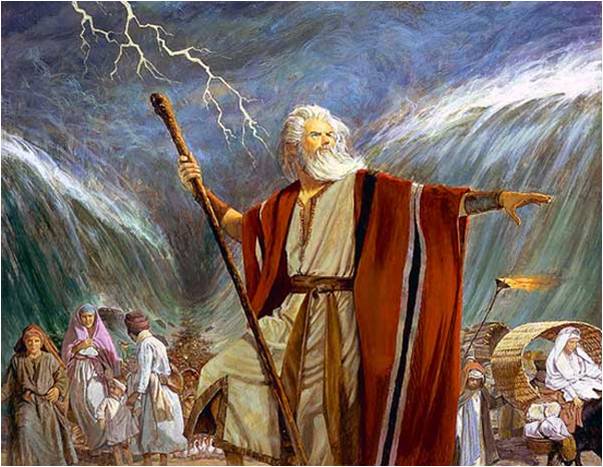
It was with great with great signs and wonders, that Avinu Malkeinu (our Father and King) delivered the Hebrews, from slavery, in the land of Egypt. The awesomeness of that ancient event is still remembered each spring as Believers sit together to celebrate the Passover Seder meal. Interestingly, according to Scripture, there will soon be a greater exodus, with such a vast deliverance for the Chosen of the LORD, that it will overshadow the Egyptian exodus. This future event will be so momentous, that the former, will not be mentioned anymore. The prophet Jeremiah foretells of this day. “Therefore, behold, the days come, says the LORD, that they shall no more say, The LORD lives [Yahweh Chai], which brought up the children of Israel out of the land of Egypt; but, The LORD lives, which brought up and which led the seed of the house of Israel out of the north country, and from all countries whither I had driven them; and they shall dwell in their own land.” (Jer. 23:7-8)

When we look to the Torah concerning these things, much is revealed about the prophetic events that are soon to unfold. This spring, as we observe Passover, we will look back into history at the faithfulness of Yahweh Almighty to deliver His people from bondage. We also will celebrate as a rehearsal for the prophetic Kingdom when the righteous Branch of David, Messiah Yeshua, will gather us back to the Promised Land where He will reign upon the earth as our King.

In the exodus from Egypt we find, “…the LORD brought us forth out of Egypt with a mighty hand, and with an outstretched arm, and with great terribleness, and with signs, and with wonders.” (Deut. 26:8) In this passage, the Hebrew word for “signs” stands for signals, or distinguishing marks. This year many Believers are having their attention drawn to signs in the heavens. God is revealing these signals in the heavens for the purpose of getting our attention back on His calendar, His timing, and His feasts. The Hebrew word for “wonders” means a miraculous display of God’s power, or tokens of a future event. Therefore, based on this understanding, of the first exodus, we should expect signs and wonders to happen among us in the greater exodus to come.

The purpose of the LORD’s signs and wonders, is to establish His Word and authority, to His Chosen people. “And Aaron spoke all the words which the LORD had spoken unto Moses, and did the signs in the sight of the people. And the people believed: and when they heard that the LORD had visited the children of Israel, and that He had looked upon their affliction, then they bowed their heads and worshiped." (Exo. 4:30-31) True signs and wonders from Yahweh Almighty cause people to bow down in reverence, not fall back in disbelief. To kneel and bow down is an act of voluntary submission to Him.

Next the LORD used signs and wonders to display His power before Pharaoh, but Pharaoh refused to believe in God’s Word. “And the LORD said unto Moses, See, I have made thee a god to Pharaoh: and Aaron thy brother shall be thy prophet. Thou shall speak all that I command thee…And I will harden Pharaoh's heart, and multiply my signs and my wonders in the land of Egypt…Pharaoh shall not hearken unto you, that I may lay my hand upon Egypt, and bring forth mine armies, and my people the children of Israel, out of the land of Egypt by great judgments,” (Exo. 7:1-4) The Holy One’s purpose in displaying His power was for the Egyptians to have the opportunity to “…know that I am the LORD, when I stretch forth mine hand upon Egypt, and bring out the children of Israel from among them.” (Exo. 7:5) Signs and wonders, even when they are used as judgments upon people, can be part of the Father’s mercy toward unbelievers. It was through His signs and wonders that many Egyptians came to believe in His Word.  (More about this in Part Two with the upcoming discussion of the plagues).

It is essential that we realize in that the deceiving forces of darkness can also imitate the signs and wonders of God, but only to some extent. “And Moses and Aaron went in unto Pharaoh, and they did so as the LORD had commanded: and Aaron cast down his rod before Pharaoh, and before his servants, and it became a serpent. Then Pharaoh also called the wise men and the sorcerers: now the magicians of Egypt, they also did in like manner with their enchantments.  For they cast down every man his rod, and they became serpents: but Aaron's rod swallowed up their rods,” (Exo. 7:10-12)

This passage reveals that not all supernatural signs and wonders are from the Holy One of Israel. There are supposed “wise men” that imitate Yahweh’s miracles with enchantments or magic. This is why Yeshua give us many end time warnings in Matt. chapter 24. When His disciples questioned Him about what would be the sign of His coming and the end of the world, He answered, “Take heed that no man deceives you. For many shall come in my name, saying, I am Christ, [ie. “I am anointed”]; and shall deceive many…and many false prophets shall rise, and shall deceive many…Then if any man shall say to you, Lo, here is the Christ [“the anointed man of God”], or there; believe it not. For there shall arise false Christs [anointed ones], and false prophets, and shall show great signs and wonders; in so much that, If it were possible, they shall deceive the very elect. Behold I have told you before.”

Many of the distinguishing marks of the true Believer hinge on the little word “If”:

If you love me, keep my commandments” (John 14:15).

“To the law [Torah] and to the testimony: If they speak not according to this word, it is because there is no light in them” (Is. 8:20).

To discern a prophet’s intent, according to the Word, include their view of Torah. Do not be deceived according to the signs and wonders they are able to display. True prophets of God return God’s people to His covenant. The signs of the Covenant are the truths that don’t make you wonder. In the last days there will be many supernatural miracles occurring. Some of these will occur at the Word of God, while others will come from false prophets. The events of the future will parallel what took place in ancient Egypt. At the beginning of the deliverance from Egyptian slavery, it must have been confusing to see both spiritual camps at work, one produced true signs and wonders, while the other produced imitations.

As we look at the plagues that took place in Egypt, we will see when the limits of deception meet their match. The magicians in Pharaoh’s court were able to demonstrate their limited power, but it was only for a season. During the fourth plague, we will see how Yahweh makes a distinction between who are His people, and who are not.
Click here for Part Two 

Firstfruits and the Women Who First Preached the Good News

Firstfruits and the Women Who First Preached the Good News

The Women that Followed Messiah from Galilee

Image

In the beginning of Messiah Yeshua’s ministry, along with the Twelve Apostles, there was a group of women that followed Him from Galilee. We read about them in the gospels, but perhaps we have not paid attention to them before.

And it came about soon afterwards, that He [Yeshua/Jesus] began going about…proclaiming and preaching the Kingdom of God; and the twelve were with Him, and also some women…Mary who was called Magdalene…Joanna the wife of Chuza, Herod's steward, and Susanna, and many others who were contributing to their support out of their private means. (Luke 8:1-3)

These women were the first-hand witnesses of the Gospel of Messiah. They saw His crucifixion on the Day of Passover, they observed where He was buried for three days and nights during  Unleavened Bread, and they confirmed His resurrection on the day after the weekly Sabbath on the Biblical holiday of Firstfruits.  The Scriptures confirm this beginning with Matt. 27.

Now the centurion…saw the earthquake and the things that were happening, became very frightened, and said, ‘Truly this was the Son of God!’  And many women were there looking on from a distance, who had followed Yeshua [Jesus] from Galilee…among whom was Mary Magdalene, along with Mary the mother of James and Joseph, and the mother of the sons of Zebedee. (Matt. 27:54-56)

After Yeshua's death, these female disciples watched and remained with the body of Messiah, as they waited for His burial. They were attentive to ministering to the needs of Yeshua's body.

And when it was evening, there came a rich man from Arimathea, named Joseph, who himself had also become a disciple of Yeshua. This man went to Pilate and asked for the body…And Joseph took the body and wrapped it in a clean linen cloth, and laid it in his own new tomb…and he rolled a large stone against the entrance of the tomb and went away. And Mary Magdalene was there, and the other Mary, sitting opposite the grave. (Matt. 27:57-61)

...the day was the preparation, and the Sabbath [annual Sabbath of Unleavened Bread] drew on. And the women also, which came with Him from Galilee, followed after, and beheld the sepulcher, and how His body was laid. They returned, prepared spices and ointments, and rested the Sabbath day [the first day of Unleavened Bread] according to the commandment. (Luke 23:54-56)

And when the Sabbath was past, Mary Magdalene, and Mary the mother of James, and Salome, had bought sweet spices, that they might come and anoint him. (Mark 16:1)

The book of John (20:1) states that, “it was yet dark” when Mary Magdalene came to the tomb . The Greek text indicates the hour was between 3:00-6:00 am. The book of Matthew states, “In the end of the Sabbath, as it began to dawn toward the first day of the week, came Mary Magdalene and the other Mary to see the sepulcher.” (Matt. 28:1)  In Hebraic reckoning the new day begins, just as the sun sets on the previous day. Therefore, during the dark hours, of the first day of the week, on the Biblical holiday of Firstfruits, Messiah was raised from the dead.

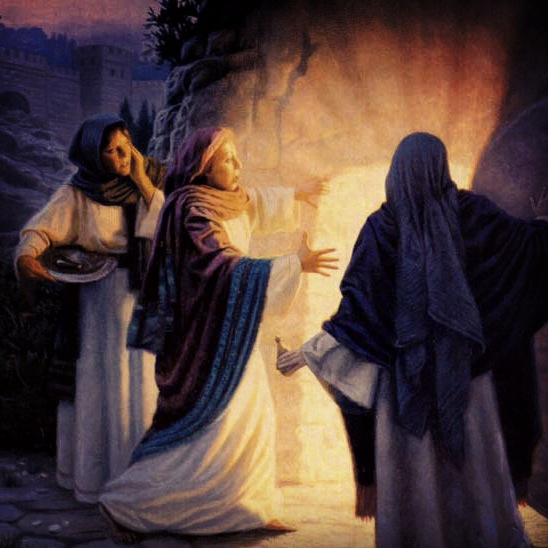
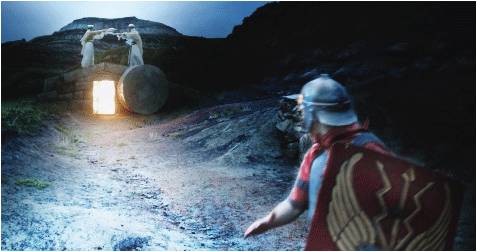
And, behold, there was a great earthquake: for the angel of the Lord descended from heaven, and came and rolled back the stone from the door, and sat upon it. His countenance was like lightning, and his raiment white as snow: And for fear of him the keepers did shake, and became as dead men. And the angel answered and said unto the women, "Fear not: for I know that you seek Yeshua, which was crucified.  He is not here: for He is risen, as He said…And go quickly, and tell His disciples that He is risen from the dead"…And they departed quickly from the sepulcher with fear and great joy; and did run to bring His disciples word. (Matt. 28:2-8)

When the women arrived at the tomb, they discovered that the stone had been rolled away. The resurrection of Messiah had already occurred before the first light of day. The only people present at the time were the soldiers keeping watch, and they did not witness the resurrection, because they had passed out in fear at the sight of the angelic visitation. When they recovered from their dread, they must have run from the scene in stark terror.

 Image

This is a good time to interject something. Today, some skeptics state that Christianity is ancient Mithraism revisited. To some degree they have a point, because modern Christianity has strayed away from the Biblical Jewish or Hebraic roots of the faith. There are traditions and customs, adopted in the fourth century, that many unknowing Christians still keep, that have their origins in Mithraism. The worship of Mithra was a mystery religion of Roman soldiers, sailors, and merchants; one that only men participated in. If one wanted to create evidence for the cult of Mithra in the resurrection story, men should have arrived at the tomb first. The detailed Biblical information of women being present to witnesses of the death, burial, resurrection, and ascension of Messiah, throws out the Mithraism speculation all together. As Christians and Jews are replacing the traditions of man in their lives, with the instructions of Scripture, we should also take another look at the believing women in the first century. What role should women play, as commanded by the angels and Yeshua, in the preaching of the Good News?

The word angel, in both Hebrew and Greek, means a messenger. The message given by the angels to the women was:

Why seek ye the living among the dead? He is not here, but is risen: remember how He spoke unto you when He was yet in Galilee, Saying, The Son of man must be delivered into the hands of sinful men, and be crucified, and the third day rise again. And they remembered His words, and returned from the sepulcher, and told all these things unto the eleven, and to all the rest. It was Mary Magdalene,and Joanna, and Mary the mother of James, and other women that were with them, which told these things unto the apostles. And their words seemed to them as idle tales, and they believed them not. Then arose Peter, and ran unto the sepulcher; and stooping down, he beheld the linen clothes laid by themselves, and departed, wondering in himself at that which was come to pass. (Luke 24:5-12)

While Peter and John ran to the tomb, seeking evidence of the women's words, they did not believe. They left the scene, and only one woman remained to try to understand what was happening.

For as yet they knew not the scripture, that He must rise again from the dead. Then the disciples went away again unto their own home. (John 20:9-10)

Image

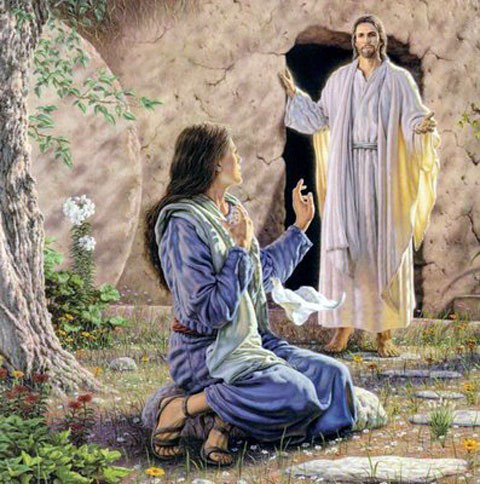
But Mary stood without at the sepulcher weeping…and looked into the sepulcher, and seeing two angels…And they said unto her, "Woman, why do you weep?" She said unto them, "Because they have taken away my Lord, and I know not where they have laid him." And when she had thus said, she turned herself back, and saw Yeshua  standing…(John 20:13)

Mary thought He was a gardener and it wasn’t until Yeshua called her by name, that she recognized Him and called Him Master.

 Yeshua said unto her, "Touch me not; for I am not yet ascended to my Father: but go to my brethren, and say unto them, I ascend unto my Father, and your Father; and to my God, and your God." Mary Magdalene came and told the disciples that she had seen the Lord, and that He had spoken these things unto her. (John 20:11-18)

Important to note here is something new is being revealed about the New Covenant in Messiah. Yeshua could have chosen to first reveal Himself after His resurrection to Peter and John.  After the group of women revealed the good news of the empty tomb to the Apostles, both men ran to the tomb. The reason Yeshua did not first reveal Himself to the males is part of the restoration of all things. Yeshua deliberately waited until Mary Magdalene was alone to reveal the new order of life in the Kingdom. Messiah's first word spoken after His resurrection was, "Woman", to enlighten us all that the curses and its associated punishments of the first Adam was over. The Seed of the Woman has overcome through the blood of Messiah Yeshua!  "Woman" it is now time for you to become a preacher of the Good News! The shocking revelation that a woman was the first to experience  the New Covenant shocked the Apostles so much that they could not fathom it.

And they, when they had heard that He was alive, and had been seen of her, believed not. After that He appeared in another form unto two of them, as they walked, and went into the country. And they went and told it unto the residue: neither believed they them.  Afterward He appeared unto the eleven as they sat at meat, and upbraided them with their unbelief and hardness of heart, because they believed not them, which had seen Him, after He was risen. And He said unto them, Go ye into all the world, and preach the gospel to every creature. (Mark 16:10-15)

Messiah rebuked the Eleven Apostles for unbelief and a hard heart because they would not receive the Good News delivered to them, by the female image bearers. They first thought the women were speaking nonsense, and did not believe in the revelation of the Word they shared. The angels gave the women a message to preach, a message to share with the Apostles, but they did not receive it.  Messiah Yeshua, Himself, gave Mary Magdalene the additional instruction to enlighten the brethren with the glorious hope, that He ascended. She had witnessed the resurrected Messiah, still they did not believe. Then two men shared the Good News of their road to Emmaus experience. Still, they did not believe until they saw Yeshua with their own eyes.

At the end of the day of Firstfruits, Yeshua entered into the disciples' presence with a rebuke, but also offered  a word of encouragement.

Then the same day at evening, being the first day of the week, when the doors were shut where the disciples were assembled for fear of the Jews, came Yeshua and stood in the midst, and said unto them, Peace be unto you. And when He had so said, He showed unto them His hands and His side. Then were the disciples glad, when they saw the Lord. Then said Yeshua to them again, Peace be unto you: as my Father hath sent Me, even so send I you. And when He had said this, He breathed on them, and said unto them, Receive ye the Holy Ghost. (John 20:19-22)

The women, who traveled with Messiah from the beginning of His ministry in Galilee, were included in these disciples of Yeshua. One reason we can deduce this, is they knew where the hiding place was. Mary Magdalene traveled there at least two different times on the day of Firstfruits; first with a message from the angels and then again later following  Yeshua’s instructions. Interesting to note, the women were not hiding in fear, like their male counterparts. Instead, they were seeking the LORD, by drawing near to the body of Messiah. Their seeking lead to them being used as apostles to the Apostles.

The book of Acts gives us more details, about the women, who followed Yeshua from Galilee.

Until the day in which He was taken up, after that He through the Holy Ghost had given commandments unto the apostles whom He had chosen: To whom also He showed himself alive after His passion by many infallible proofs, being seen of them [men and women] forty days, and speaking of the things pertaining to the kingdom of God:  And, being assembled together with them, commanded them that they should not depart from Jerusalem, but wait for the promise of the Father, which, saith He, ye have heard of me.  (Acts 1:2-4)

And when He had spoken these things, while they beheld, He was taken up; and a cloud received him out of their sight. And while they looked steadfastly toward heaven as He went up, behold, two men stood by them, in white apparel; Which also said, Ye men [people] of Galilee, why stand ye gazing up into heaven? This same Yeshua, which is taken up from you into heaven, shall so come, in like manner, as ye have seen Him go into heaven. Then returned they unto Jerusalem from the mount called Olivet, which is from Jerusalem a Sabbath day's journey. And when they were come in, they went up into an upper room, where abode both Peter, and James, and John, and Andrew, Philip, and Thomas, Bartholomew, and Matthew, James the son of Alphaeus, and Simon Zelotes, and Judas the brother of James. These all continued with one accord in prayer and supplication, with the women... ( Acts 1:9-14)

The women, who followed Messiah from Galilee, were given the authority to preach, inform, and share the revelation of the Gospel, even to the male Apostles, by both angels and Messiah Himself. Perhaps we should reconsider the verse, "For this cause ought the woman to have power [authority] on her head because of the angels" (1 Cor. 11;10). Since Messiah Yeshua, along with the angels, confirmed the intent of the prophet Joel (vs. 2:28 and Acts 2:17-21) at His Firstfruits resurrection, we should also give  the liberty and authority to His Spirit-led women to preach and teach, in both our congregations and our communities of faith.

May we all soften our hearts to the kindness of our Savior toward His women, and be of one accord, until He returns.

Firstfruits and the Authority of Believing Women – Part One

Firstfruits and the Authority of Believing Women – Part One


Image

This year as we celebrated Purim, something new jumped from the pages of Scripture. It has to do with the role of women in Biblical communities of faith.

In the days of Esther, the treatment of the Jewish women in a pagan kingdom was ungodly, to say the least.  Imagine suggesting one of our daughters join a harem in hopes of becoming the next queen?  We would be barred from the assembly of the righteous, for sure! But that is just what Mordecai did with his cousin, Hadassah, better known as Esther.  Modecai was as lost in the pagan customs of the ungodly as Esther was.

Esther had one night with the king, along with all the other eligible young ladies of Persia, to determine which girl pleased the king the most. Oh Vey!  How horrible for the daughters of Abraham! But then again, these Jews chose to remain in the pleasures of Babylon. Their families had not chosen not to return to the Land of Promise with Cyrus’s decree to rebuild Jerusalem.  Ancient Babylon was overtaken by the Persians, and in the days of Esther, the daughters of Zion, in the Kingdom of Persia, were put to a shameful test.

Despite the unholy situation, God used Esther’s position in the Persian kingdom to save the Jews, even those who had obeyed and returned to Jerusalem.  At that time, the Kingdom of Persia extended all the way to Israel. Every Jewish life was threatened by Haman’s decrees.  Even though their ancestors had not returned at the opportunity offered to rebuild the ancient ruins, God had a plan for those who remained in Babylon/Persia. His plan was to save all His people from annihilation, and he used the vulnerability of one young woman to accomplish that goal.

Because of the Jewish victory over their enemies in the days of Haman [Boo], "The Jews ordained, and took upon them, and upon their seed, and upon all such as joined themselves unto them, so as it should not fail, that they would keep these two days according to their writing, and according to their appointed time every year. And that these days should be remembered and kept throughout every generation, every family, every province, and every city; and that these days of Purim should not fail from among the Jews, nor the memorial of them perish from their seed.  Then Esther the queen, the daughter of Abihail, and Mordecai the Jew, wrote with all authority, to confirm this second letter of Purim. And he sent the letters unto all the Jews, to the hundred twenty and seven provinces of the kingdom of Ahasuerus, with words of peace and truth, to confirm these days of Purim in their times appointed, according as Mordecai the Jew and Esther the queen had enjoined them, and as they had decreed for themselves and for their seed, the matters of the fastings and their cry. And the decree of Esther confirmed these matters of Purim; and it was written in the book.” (Esther  9:27-32)

In what book do we have this record? The Bible! For those who think that women have no authority to give any Biblical instruction for the Body of Messiah, think again. Any man, who celebrates the Feast of Lots, Purim, is following the authority of a woman, and it is with God's approval!

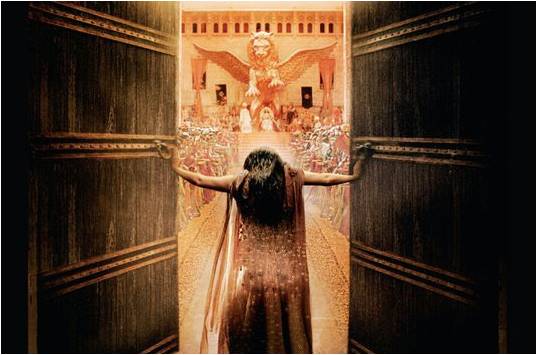
There was a change in status for the role of women with the institution of Esther’s decree to the Believing community. Esther did her work with the full authority of her male guardian, Mordecai the Jew. When male and female work together, in one accord, the authority of Scripture is in full force. This produced a change in status for women, from the pagan kingdom’s abuse, to the equality of the Kingdom of God. The initiation, of this change for women, was instituted on the day of Firstfruits* when Esther burst into the throne room and made her request before the king.

Part Two will continue with the transformation of the role of women at the resurrection of Messiah Yeshua.

*See previous blog posts on the timing of the original Purim drama during the week of Passover and Unleavened Bread.

God’s Timing – Messiah’s Victory

God’s Timing – Messiah’s Victory

Image

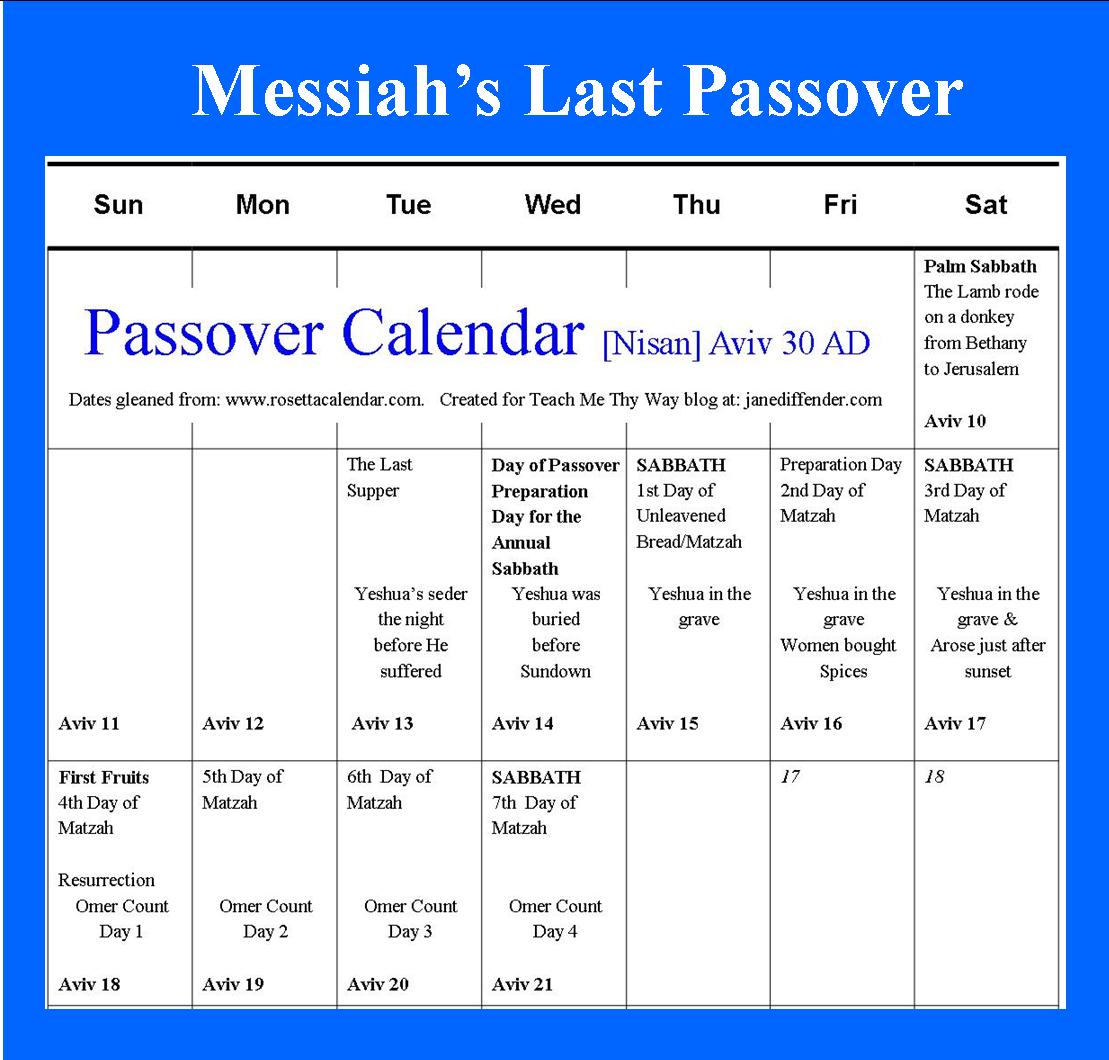
Modern Christian teachings do not explain the full meaning of Messiah's words when He said, "An evil and adulterous generation craves for a sign; and yet no sign shall be given to it but the sign of Jonah the prophet; for just as Jonah was three days and three nights in the belly of the sea monster, so shall the Son of Man be three days and three nights in the heart of the earth" Matthew 12:39-40.  If it ever troubled you, that a Friday crucifixion with a Sunday morning resurrection does not add up, to three days and nights, here is an explanation.

In the fourth century, Christianity severed its Jewish/Hebraic Roots from the foundation of the faith. In doing so, today's Christians also lost the understanding of God's calendar. When modern people read the Gospels, they do not understand that there are three Sabbaths in the week of Passover, or the Feast of Unleavened Bread, two annual Sabbaths, as well as the weekly Sabbath. Putting everything back in the Hebraic context of Scripture, by honoring the Torah [law or instructions of God], one can now see how Messiah Yeshua could be buried before the first annual Sabbath, and still remain in the tomb, to fulfill the sign of Jonah. In the year 30 A.D. the Biblical Holiday the First Fruits of the barley harvest commenced exactly three days and nights after Messiah was placed in the grave. The entire three days and nights had to be fulfilled, but Yahweh didn't delay in bringing forth His Bread of Life from the earth. At the end of the weekly Sabbath, at the beginning [dawn] of the first day of the week [sundown Sat. night], Messiah was raised from the grave. Proof that He was not raised at sunrise is that it was still dark when the women found the stone rolled away. Isn't God's timing incredible! He keeps His dates [times or in Hebrew moedim] with his people. May we all be on time for our date the King this upcoming holiday season.

God Keeps His Calendar Appointments

God Keeps His Calendar Appointments

Timing is Everything with God

 Image

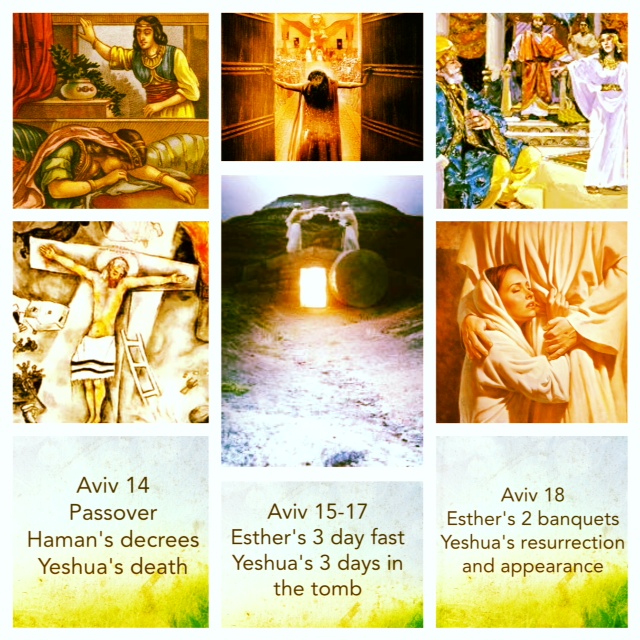
What does the death burial and resurrection of Messiah Yeshua have to do with the dramatic events in the life of Queen Esther of Persia? Much in every way. The first century passion of Messiah was accomplished on the very anniversary days of the fasting and royal banquets of Queen Esther. The days of Passover, Unleavened Bread, and First Fruits were all unfolding, during both of the dramatic life and death events, in Esther's and Yeshua's lives. Coincidence? Not with God.

Psalm 22 is a Jewish song for the Purim holiday. It is also a Christian Psalm that is referred to at Easter time to speak of the horrors of the crucifixion. What does Psalm 22 have to do with both Queen Esther and Messiah Yeshua? According to Jewish understanding about Psalm 22, King David was speaking prophetically of Esther's anguish of soul, and the deliverance of the Jewish people. According to Christian understanding in Psalm 22, King David was speaking prophetically about the death  of Messiah. Can they both views be correct? Yes, Psalm 22 is about Esther and about Yeshua!  Because King David saw in the prophetic future, both sets of the dramatic events that would foreshadow the coming of Messiah. God keeps His calendar appointments, to the day, and to the hour.

We, as Messianic Believers, have the privilege of seeing through both the lenses of Judaism and Christianity, and see an entirely different paradigm than most Christians or Jews perceive. If you consider the Jewish lens, or understanding of Scripture to be the color blue, and the Christian lens to be red, each one is unique, and entirely different from the other. Looking through glasses with the color lens of your paradigm dictates what your perception. When you layer one lens on top of the other, the two together, one can now see through purple lenses, and given the view point of royal perspective. That is the privilege we share of being called into the Kingdom, for such as time as this.

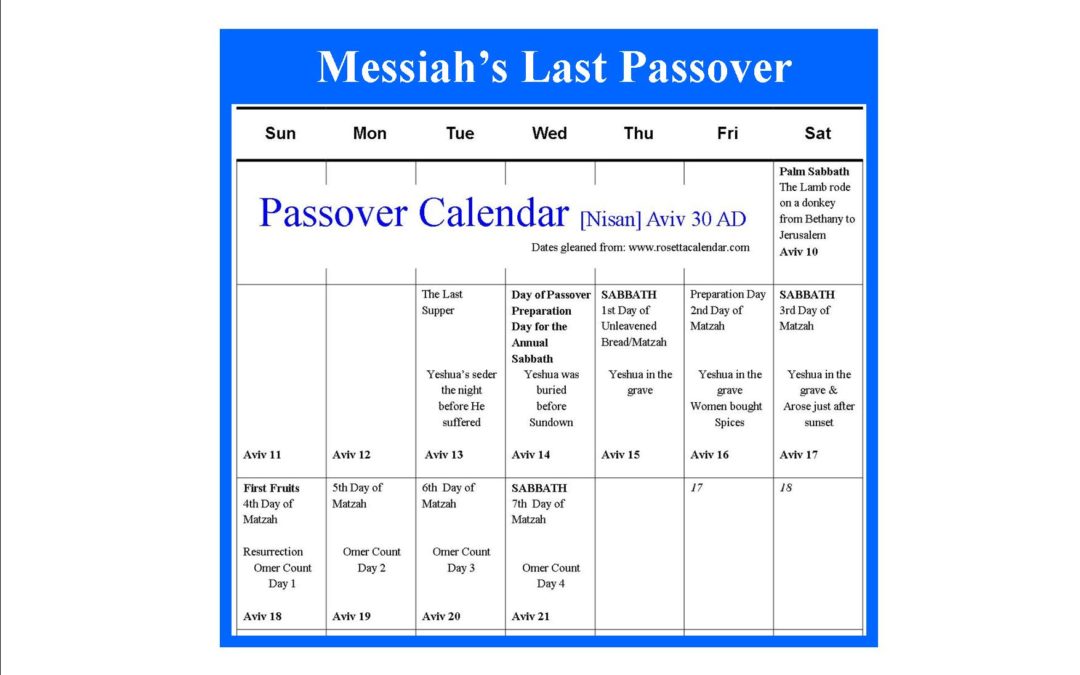
In the year of Yeshua's death and resurrection, 30 A.D., the day of Passover, Aviv [Nisan] 14th, was the fourth day of the week, a Wednesday. The day of Aviv 10th in that year, a day traditionally known by Christians as Palm Sunday, was on the weekly Sabbath, a Saturday (Palm Sabbath).  Four days after the Lamb of God was taken and examined in the Temple, He was labeled with the title, “The King of the Jews”, and hung upon the cross. Messiah Yeshua was lifted up on the tree on the fourth day of the week. Counting that day, and the three days in nights He was in the tomb, brings us to Aviv 18, four days later.

The number four has to do with authority. On day four of creation, the sun, moon, and stars were created, to rule the earth. The lights in the heavens govern our calendar, by determining the Feasts of the LORD. “And God said, Let there be lights in the firmament of the heaven to divide the day from the night; and let them be for signs, and for seasons  [moedim – feasts], and for days, and years” (Genesis 1:14).

In 30 A.D. Yeshua gave up His authority, and died on the fourth day, at the time the Temple Passover lambs were slaughtered, the ninth hour. He was placed in the tomb for three nights and three days. At the end of the weekly Sabbath, at the time of Havdalah, Messiah Yeshua was resurrected from the tomb, defeating the power of death. The timing of this was at the beginning (the evening) of the Biblical holiday of First Fruits. His resurrection destroyed the power of the Enemy, and made a public spectacle of Satan. “Knowing that Messiah being raised from the dead dieth no more; death hath no more dominion over Him” (Romans 6:9) "And having spoiled principalities and powers, He made a shew of them openly, triumphing over them in it." (Col. 2:15)

Centuries prior, during this same days on the Biblical calendar, Queen Esther and her people, also “died” to themselves in fasting and prayer. At the end of those three days and nights, at the time of Havdalah, Esther entered the King’s chamber, unannounced, and invited the King to the first of two banquets. She risked her life to save her people from perishing. This was also the eve of First Fruits.

At the first banquet, Esther did not tell the King her reason for her bursting forth into his throne room, but instead, invited the king to a second banquet. After the first banquet with the king and queen, Haman [Boo] was puffed up in his pride, but he could not enjoy the moment, as long a Mordecai The Jew existed. After complaining to his wife and friends, he took their advice, and had gallows built, with the plans to hang Mordecai, the very next day, the day of First Fruits.

The events that transpired, on this first day of the week, are a dramatic irony. Haman sought his own honor, only to be publicly disgraced when Mordecai The Jew was lifted up and paraded in royal splendor. Humble Mordecai, was raised up in honor, to the humiliation of Haman. The very gallows that Haman built for the destruction of The Jew, instead, came upon his own head. The planned destruction of The Jew, was transformed into redemption for the Jewish people.

As Mordecai The Jew was lifted up in the days of Esther, so would the King of the Jews be lifted up in the year 30 A.D.  As the enemy Haman was exposed, so was the Enemy Satan put to shame. Timing is everything with our God. Haman should have known, that Yahweh rules and reigns. The appointments God has on His calendar will be kept, for the redemption of the world.  His times and His seasons are His reasons for His people to rejoice and celebrate. Purim and the Biblical Spring Feast days of Passover, Unleavened Bread, and the First Fruits of the Resurrection, are those very days for us to rejoice in.

As we celebrate this year, may our traditional mealtime blessing be enhanced, as we link Purim to Passover, with the understanding of, "Blessed are You, Adonai, who brings forth the Bread (of Life) from the Earth (the tomb). Messiah Yeshua, The Bread of Life, The King of the Jews, was resurrected on the exact same day that Mordecai The Jew was lifted up and honored.  Death was defeated on First Fruits, both in Esther's day, as well as for eternity by Messiah Yeshua. This is why Psalm 22 is about redemption for both the Jew and non-Jew. A coincidence? Not with God.

Blessed are you O LORD, Who has brought us to this time and season. Chag Sameach!